
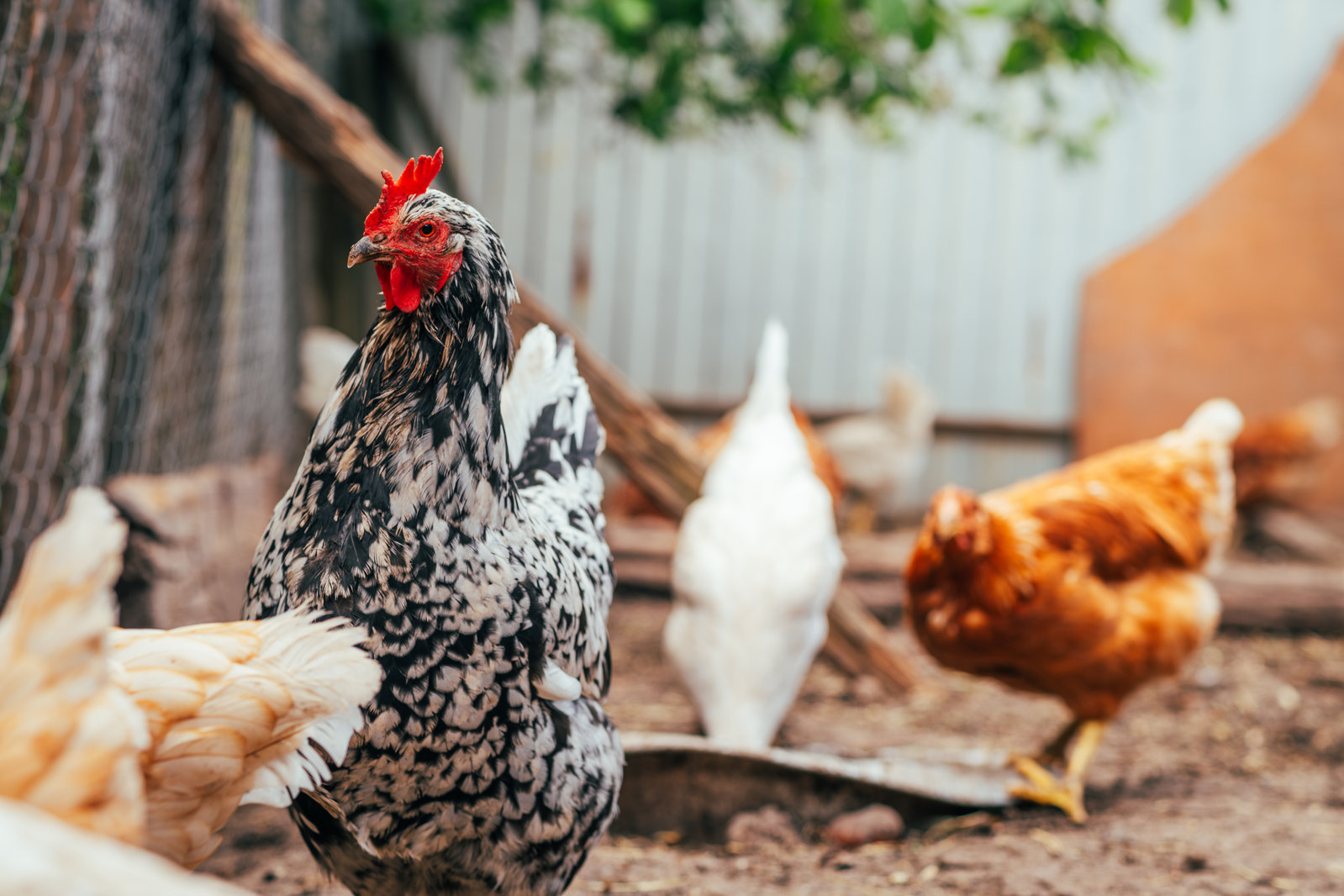
A Grandad Farms guide
Learn about choosing, brooding, housing, and feeding laying hens, from the family behind Grandad Farms in Emmett, Idaho.
Choosing your laying hen breed
Laying hens fall into three main types based on egg production and characteristics:
Most eggs
High-production layers
Hybrids developed for commercial egg farms, bred to lay 250 to 300 eggs per year with excellent feed efficiency. They often have a shorter laying lifespan. Examples: ISA Brown, White Leghorn, Golden Comet.
Hardy & colorful
Heritage layers
Traditional, long-lived breeds that may lay fewer eggs (150 to 220 per year) but are typically hardier and well suited to pasture. Examples: Ameraucanas, Welsummers, and Marans, valued for blue, dark brown, or speckled eggs.
Eggs & meat
Dual-purpose layers
Balance egg production and meat yield, ideal for small farms and homesteaders. Examples: Barred Plymouth Rocks, Rhode Island Reds, Sussex.
We raise Barred Plymouth Rocks at Grandad Farms because they handle cold and heat well and are rarely broody. (Broody means a hen's instinct to sit on and incubate eggs, often becoming protective and stopping egg production during that time.)
We source our laying chicks from Dunlap Hatchery in Caldwell, Idaho, and recommend them to Treasure Valley locals. Murray McMurray is a reputable online hatchery.
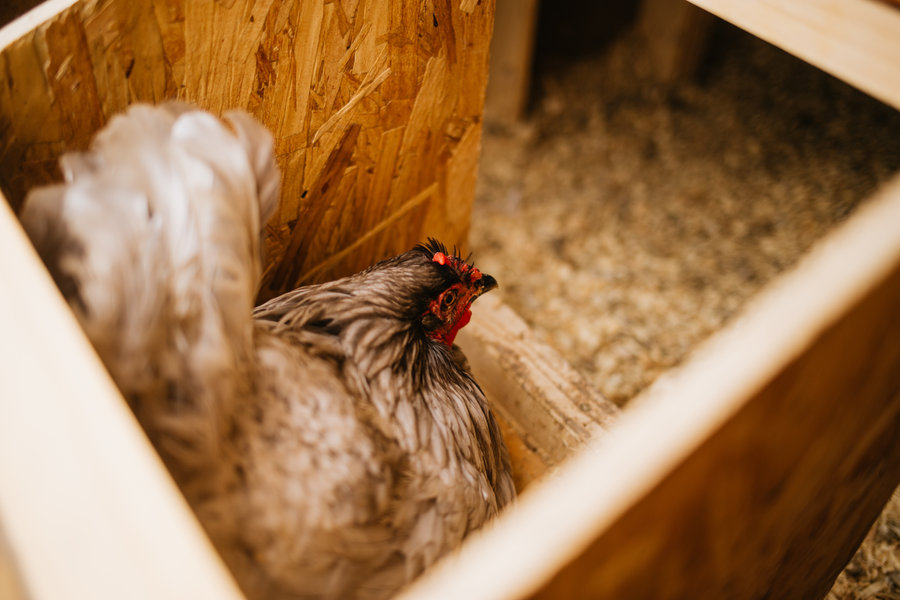
Brooding your chicks
Chicks need a warm, draft-free space for their first few weeks. Instead of a traditional heat lamp, we recommend a heated plate. Heated plates are safer, reduce the risk of fire, and give chicks a more natural source of warmth.
Keep chicks at around 95°F their first week, then lower the temperature by about 5°F each week. Our heating plates don't have adjustable temperatures, so we raise the plates as the chicks grow.
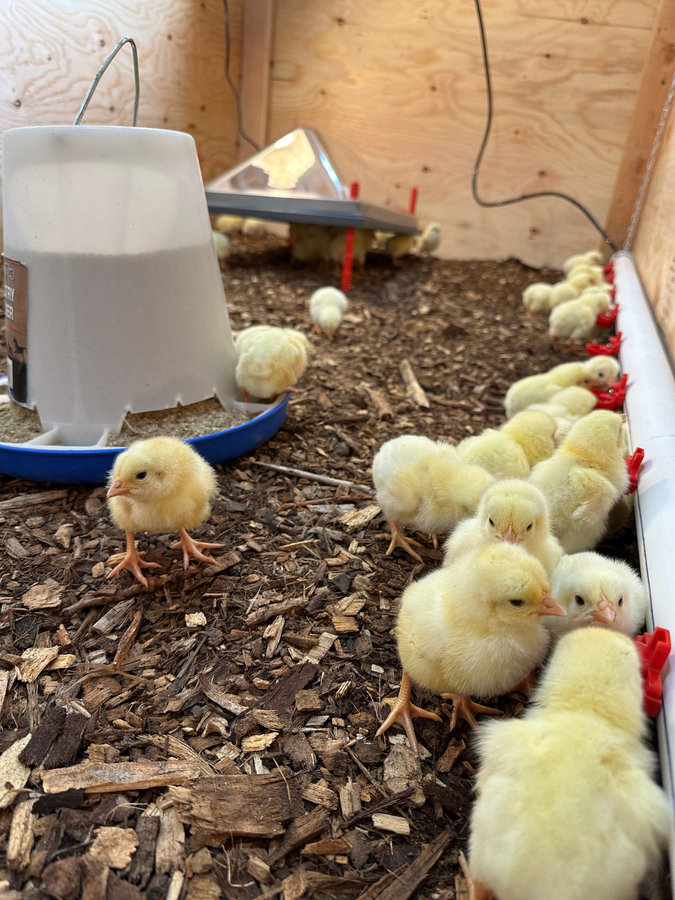
Make sure the chicks have clean bedding, fresh water, and a complete chick starter. Instead of changing the bedding, we add dry bark or fresh pine shavings on top of the used bedding. We use water nipples on a hanging horizontal PVC pipe to keep water clean. When we put chicks in the brooder, we express a little water into the nipple cups and dip the beaks of about 25% of the chicks so they learn where the water is.
Chick heating plate · Water nipples · Our chick feeds
Shelters
There are two main options: a mobile coop with portable fencing, or a stationary coop with a run and/or pasture. Both have advantages depending on your space, management style, and predator risk.
Option 1
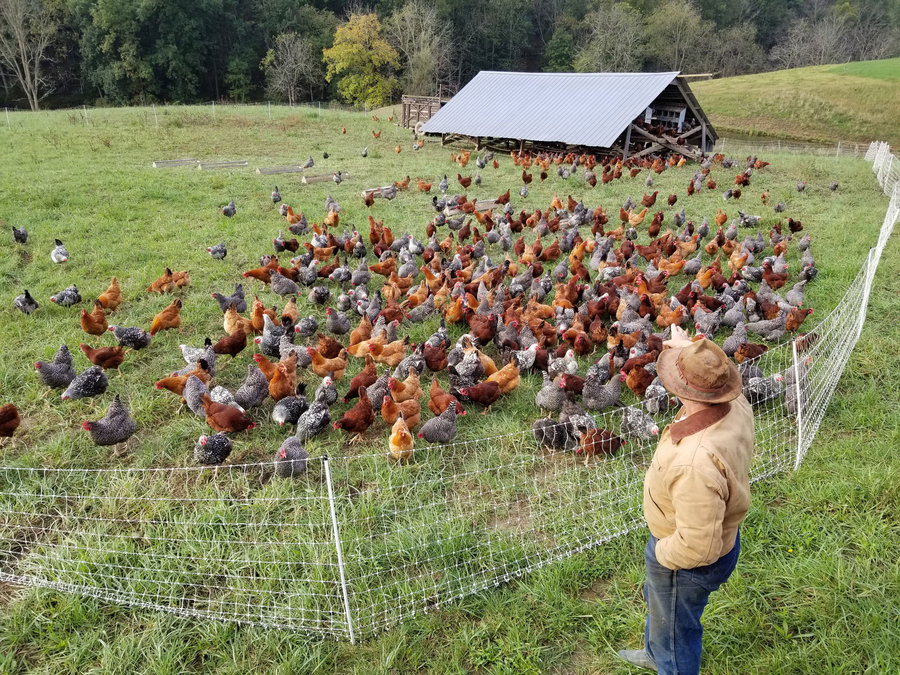
Mobile coop & portable fencing
A mobile coop like Joel Salatin's Millennium Feathernet, paired with portable electric netting, lets you move hens to fresh pasture regularly. That reduces parasite buildup, gives hens continuous access to new grass and bugs, and helps build soil fertility. It works best on larger properties. Watch the Feathernet video.
Option 2
Stationary coop with run or free range
A fixed coop gives your flock a safe, weatherproof shelter. Pair it with a secure run, or let hens free-range by day and return at night. Look for good ventilation, nesting boxes, roosting bars, and predator-proof construction.
Feeding your laying hens
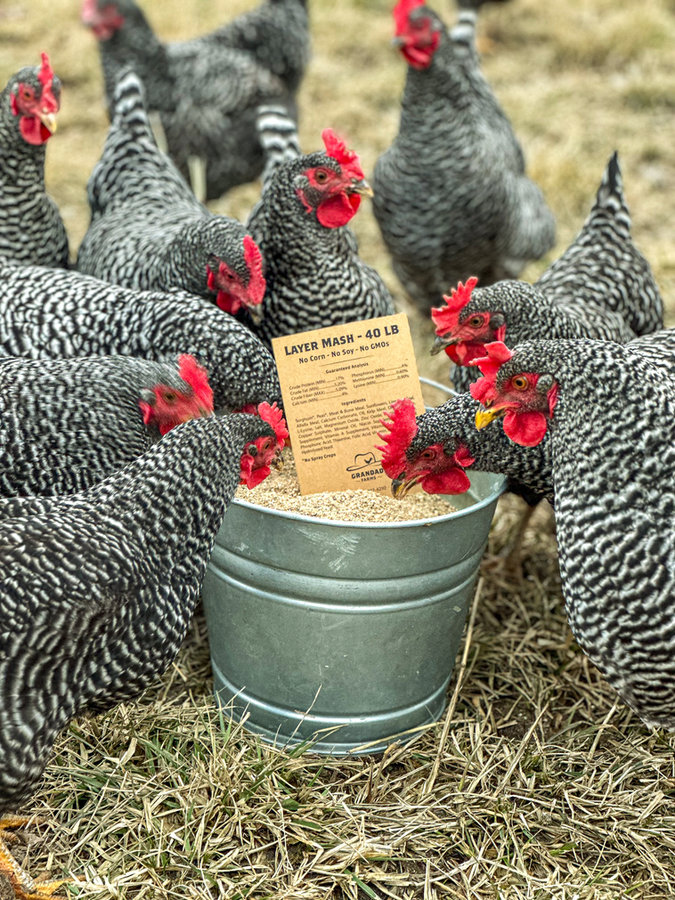
Your chickens' needs change as they grow, so the most important rule is simple: feed a complete feed made for their age, and keep clean, fresh water available at all times. A complete feed is designed to be the main diet, so it shouldn't be diluted with lots of scratch, scraps, or treats.
Chick to pullet to layer
Step 1 · Hatch
Chick starter
Start chicks on a complete chick starter for early growth and feathering. For laying breeds, feed our Coconut Chick Feed free choice from hatching; its label directions run up to 8 weeks.
Step 2 · About 6–8 weeks
Pullet grower
Growing pullets move to a grower feed from about 6–8 weeks of age until they lay their first egg. Our Coconut Pullet Grower is coming soon.
Step 3 · First egg
Layer feed
Switch to a layer feed, with its added calcium for strong eggshells, at about 18 weeks or when the first egg is laid, whichever comes first. Layer feed's high calcium isn't meant for younger growing birds.
Oyster shells and grit
Some laying hens need more calcium than their layer feed provides, especially if shells come out thin or rough. Offer oyster shells free-choice in a separate dish so each hen can take what she needs.
Grit is different: it's hard, insoluble stone that stays in the gizzard to grind food. Oyster shell is too soft to work as grit. A complete feed on its own usually doesn't require grit, but birds eating whole grains, scratch, or forage should have insoluble grit. Birds on open ground often find enough small pebbles themselves.
Treats in moderation
Kitchen scraps, scratch, and treats are fine as extras, but keep them to about 10% of the diet so hens still get the nutrition in their complete feed.
When to feed
Daily rationing
Give a measured amount each day to prevent waste. Each adult hen needs roughly 1/4 to 1/3 lb (4 to 6 oz) of feed per day.
Free choice
Feed is available at all times so hens eat as needed. Convenient, but can waste more if not managed well. We free-choice feed our laying flock with a 22 lb galvanized cone feeder from Premier1, with the feet, feed-saver grill, and hat. We see almost zero feed loss.
Fermented feed
Soak feed in water for 24 to 48 hours to make a moist mash. It takes more work, and not every feed ferments well; our Organic Coconut Layer Feed is easy to ferment.
The feeds we offer
Our Coconut Chick Feed and Organic Coconut Layer Feed contain no corn, soy, or added seed oils, using coconut oil instead, and we mix our Coconut Chick Feed on our family farm in Emmett. We also carry locally sourced non-GMO feeds made with peas and sorghum from no-spray crops.

Chicks
Coconut Chick Feed
Available · $50 / 40 lbComplete, non-medicated chick feed with 20% minimum crude protein. No corn, soy, or added seed oils.
Shop Coconut Chick FeedPullets
Coconut Pullet Grower
Coming soon · $40 / 40 lbThe next step after Coconut Chick Feed for laying breeds, from about 6–8 weeks until first egg.
View Pullet Grower
Laying hens
Organic Coconut Layer Feed
Available · $43 / 40 lbCertified organic (Oregon Tilth) complete layer feed with 16% minimum crude protein and organic oregano. Easy to ferment.
Shop Coconut Layer FeedMeat birds
Coconut Broiler Grower
Coming soon · $46 / 40 lbFor meat breeds after 3 weeks of age. Not for laying hens.
View Broiler Grower
Chicks & growing birds
Non-GMO Chick Feed
$28A locally sourced 20% protein, corn-free, soy-free feed for chicks and growing birds; also works for turkeys and ducklings.
Shop Non-GMO Chick Feed
Laying hens
Non-GMO Layer Feed
$24A locally sourced, non-GMO, corn-free, soy-free layer feed made with peas and sorghum from no-spray crops.
Shop Non-GMO Layer FeedPair any layer feed with oyster shells for extra calcium. Pickup in Emmett or Meridian, or Friday delivery across the Treasure Valley.
Daily and weekly care routine
Every day
- Refresh clean water
- Check and fill feed
- Collect eggs
- Take a quick look at each bird for anything unusual
Every week
- Clean nest boxes
- Clean coop (if applicable)
- Move mobile coop (if applicable)
- Monitor egg production
- Top off oyster shells and grit
FAQs for new flocks
How long until my hens start laying?
Usually at 5 to 6 months old.
How long do hens lay eggs?
Peak production lasts 3 to 4 years. We keep our hens for 3 years.
Washed or unwashed eggs?
We prefer unwashed eggs. They keep a natural protective coating called the bloom (or cuticle) that helps seal out bacteria and moisture, so the egg stays fresh longer without refrigeration.
How do I get my hens to lay clean eggs?
Close off the nesting boxes at night, keep the area around the nesting boxes clean, and replace the nesting material regularly.
Why are the eggshells soft?
Make sure laying hens have a separate calcium supplement. We offer oyster shells free-choice.
I hope you found this helpful! — Mark Ellison
Feed for every stage of your flock
From chick starter to layer feed, with pickup and delivery across the Treasure Valley.
Shop all feed