Swarm catching in the Treasure Valley
Boise, Caldwell, Eagle, Emmett, Garden City, Kuna, Meridian, Middleton, Nampa, and beyond!
If you see a cluster of bees, I'd love to come pick them up! Contrary to what some people say, bee swarms don't need to be captured, rescued, or saved. A swarm is a temporary group of bees in transition between their old home and a new one (a tree, barrel, wall, and so on). Most swarms are very docile, and they'll find their new home and leave within a couple of days.
At Grandad Farms, I'm breeding colonies that receive no treatments of any kind, to foster genetics that are better acclimated to this area and more resilient to pests and diseases. Some swarms come from feral hives that carry these wonderful genetics, and it's exciting to add local swarms to my treatment-free apiary.
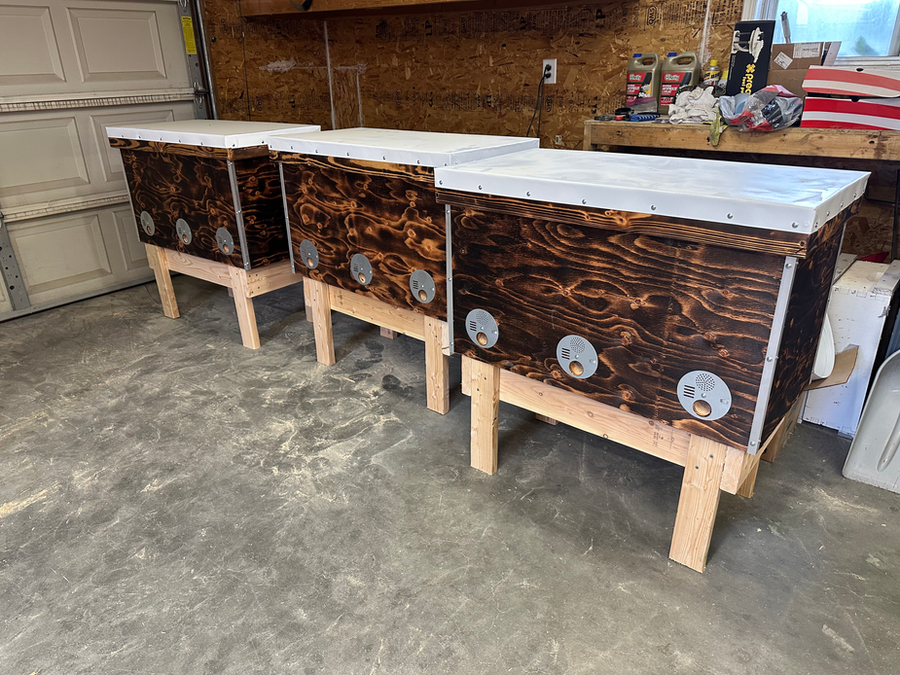
If you see a swarm, please call or text me at (208) 291-1625. Interested in seeing my apiary? I'd love to show you my wool-insulated hives, and maybe we could do a hive inspection together!
Thank you for your time!
Mark
Call or text Mark: (208) 291-1625
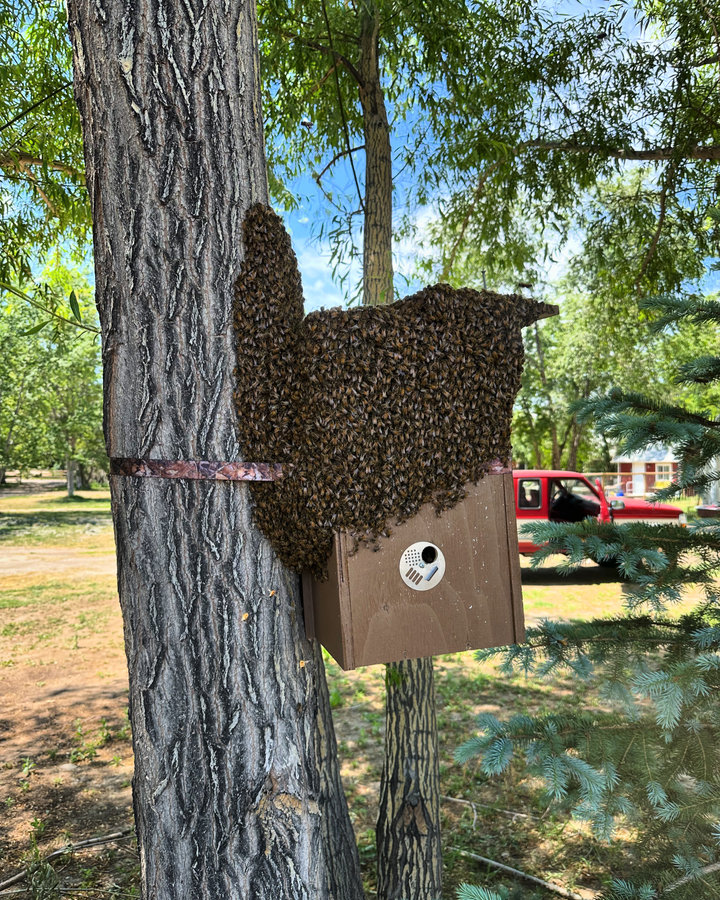
I set traps too. Here's one of my swarm traps with a swarm on top.
Swarm FAQ
What is a bee swarm?
A swarm is a temporary cluster of bees looking for a permanent home.
When is swarming season?
In our area, swarming season runs April through September, with peak activity from April to June.
Are swarms dangerous?
It's rare for bees in a swarm cluster to act aggressively. They're focused on finding a new home and are usually full of stores from their previous hive.
How long will a swarm stay?
Anywhere from a few hours to a few days. In my experience, they usually leave within 24 hours.
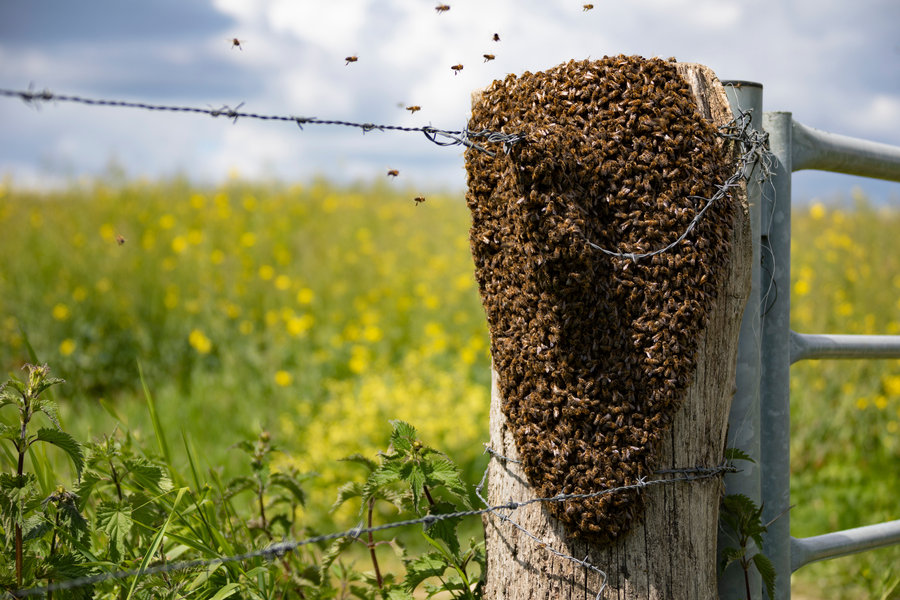
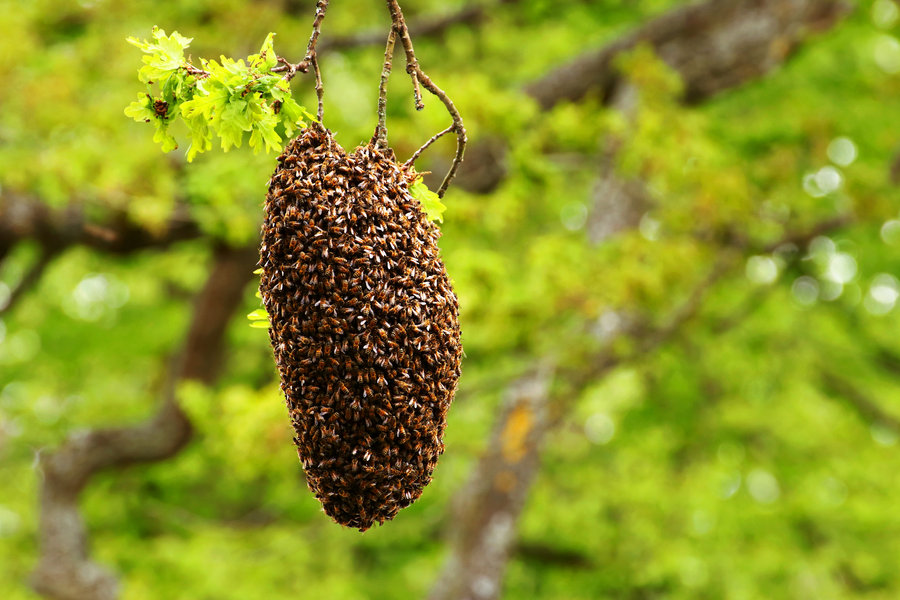
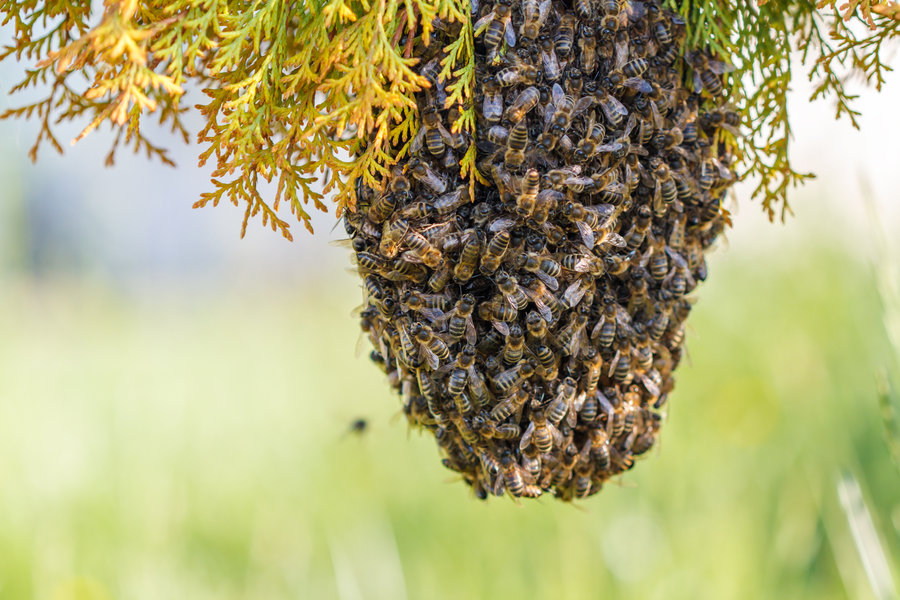
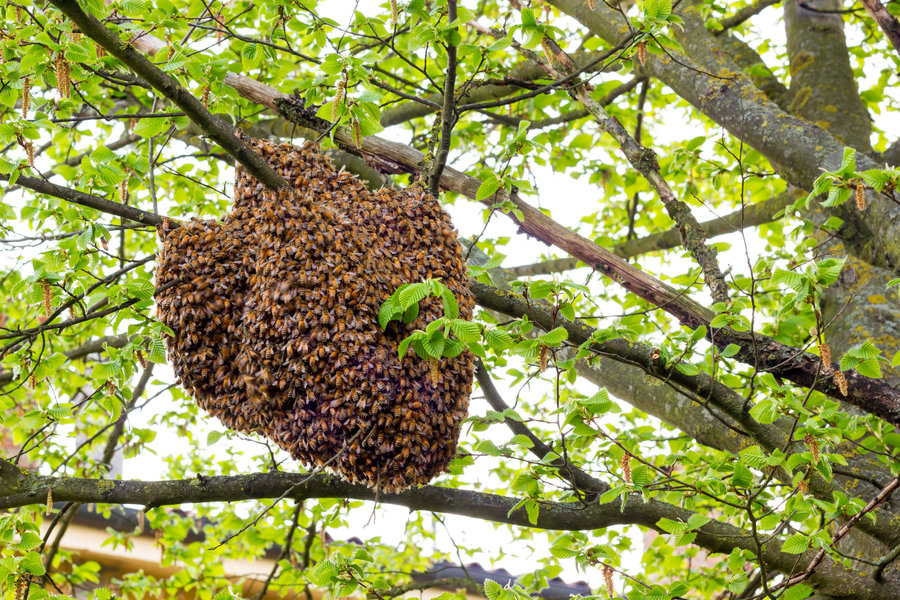
Honeybee swarm reference photos
Not sure if it's a swarm? Here's what they usually look like:
Treatment-free beekeeping resources
- The Treatment-Free Beekeeping Podcast by Solomon Parker
- HorizontalHive.com by Leo Sharashkin
- BushFarms.com by Michael Bush
- Keeping Bees with a Smile by Fedor Lazutin
- The Complete Idiot's Guide to Beekeeping by Stiglitz and Herboldsheimer
Grandad Farms' treatment-free principles
- No treatments of any kind, natural or chemical
- Mimic God's design in nature by providing a well-insulated hive
- Foundationless frames (most foundation is plastic coated in wax that carries a buildup of chemical treatments)
- No migrating out of the local climate
My favorite hive is the insulated Layens hive. Free plans are available at horizontalhive.com.